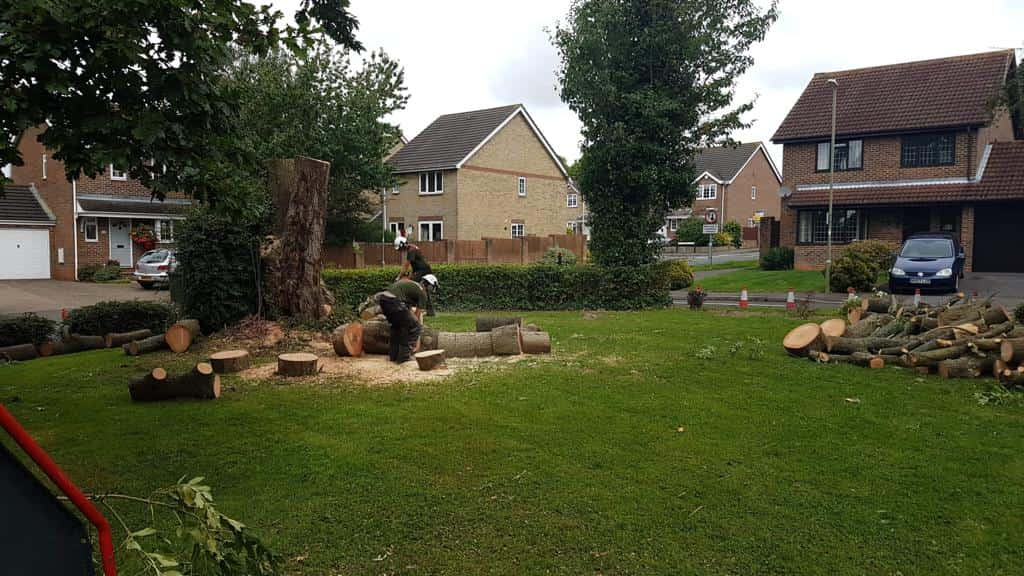
After a tree has been felled, the remaining stump can be easy to overlook. It may initially appear harmless, but it can restrict how the surrounding ground is used, interfere with garden maintenance and complicate future landscaping.
Stump grinding is a practical method of reducing the stump below ground level without excavating the entire root system. The resulting area can then be prepared for an appropriate new use, depending on the intended finish and the condition of the soil.
The Practical Benefits of Professional Stump Grinding
Whether a stump should be removed depends on its size, position and the plans for the garden. Grinding is particularly useful when the stump occupies valuable space or creates an obstruction.
Reclaim More Usable Garden Space
A stump can prevent an area from being used effectively, especially in a smaller garden. It may obstruct planting, seating, paving or the creation of a more open lawn.
Grinding reduces the stump below the surrounding surface, making the area easier to incorporate into a new layout. The required grinding depth should reflect what will happen to the ground afterwards.
Make Lawn Care Easier
Stumps and exposed roots can make mowing awkward. Grass and weeds may grow tightly around the remaining wood, while the mower has to be manoeuvred around an uneven obstacle.
Removing the visible stump creates a more manageable surface. The area will still require suitable preparation and settlement before it can be reseeded or turfed.
Reduce a Trip and Access Obstruction
A low stump can be difficult to see when surrounded by grass or planting. It may obstruct a path through the garden or make access difficult for maintenance equipment.
Grinding can remove the raised portion and improve the usability of the immediate area. This is particularly helpful where the stump is positioned near a walkway, entrance or frequently used section of the garden.
Limit Unwanted Regrowth
Some tree species can produce new shoots from a stump or remaining roots after felling. Repeatedly cutting these shoots does not necessarily address the source of the regrowth.
Grinding removes the main stump and can reduce its ability to produce further shoots. The result depends on the tree species and the condition of the root system, so professional assessment remains important.
Prevent the Stump From Becoming a Persistent Garden Feature
As a stump decays, it can soften, crack and lose its original shape. This process may take a considerable time, leaving an untidy feature that becomes harder to work around.
Grinding deals with the bulk of the remaining wood in a controlled visit. It also avoids waiting for natural decay before the ground can be reorganised.
Make Future Landscaping More Straightforward
A stump can interfere with excavation and preparation for a new patio, path, border or lawn. Even when it sits just outside the planned area, its raised base and large surface roots may restrict levels or edging.
Removing it before landscaping begins allows the site to be assessed more accurately. However, grinding does not remove every root, so the contractor should know how the ground will be used before deciding the appropriate depth and working area.
Improve the Appearance of the Garden
An old stump can draw attention away from planting and other garden features. Grinding it below the surface can create a cleaner, more consistent finish.
The appearance after grinding will depend on how the hole is reinstated. Stump grindings may need to be removed or partially reused, with suitable material added before the area is finished.
Avoid Damage to Garden Equipment
Hidden stump edges and surface roots can damage mower blades and other equipment if struck. Even careful operators can find them difficult to avoid once grass grows around the wood.
Grinding the obstruction helps make routine maintenance more straightforward, although any remaining shallow roots should still be considered when working the surrounding soil.
Stump Grinding Is Less Disruptive Than Full Excavation
Removing a complete stump and root plate can require extensive digging and may disturb a large area of the garden. Grinding focuses on the stump and selected surface roots, reducing the amount of excavation required.
This makes it useful where access or surrounding landscaping limits the working area. The stump’s diameter, tree species and proximity to other features will determine which machine and approach are suitable.
What Happens During Stump Grinding?
Before work begins, the stump and surrounding area are assessed. Stones, debris and other obstacles may need to be cleared, and nearby features must be identified.
A stump grinder uses a rotating cutting wheel to reduce the wood into small fragments. The operator works progressively across the stump until it reaches the agreed depth. Prominent surface roots may also be ground where necessary and accessible.
Does Stump Grinding Remove Every Root?
Stump grinding does not normally remove the entire underground root network. Most roots remain in the soil and gradually break down over time.
This is often sufficient when the objective is to remove the visible obstruction and prepare the surface. If the area is intended for construction or substantial excavation, the remaining roots and ground conditions may require further consideration.
What Happens to the Grindings?
The process produces a mixture of wood fragments and soil. Some material can be used to help fill the resulting hollow, but it may settle as it decomposes.
Where a firm or accurately levelled finish is needed, excess grindings may be removed and the area filled with suitable material. The correct approach depends on whether the space will become lawn, planting or another garden feature.
Why Professional Assessment Matters
Stumps can be close to fences, paving, buildings, cables, pipes or valuable planting. Restricted access may also affect which equipment can reach the site.
A professional tree surgeon can assess these factors, select an appropriate grinder and complete the work to a depth suited to the intended use of the area.
Conclusion
Stump grinding can reclaim usable space, simplify garden maintenance and prepare the ground for future landscaping. It removes the visible stump below ground level while avoiding the wider disruption associated with excavating the entire root system.
NS Tree Surgery Camberley provides professional stump grinding in Camberley, Surrey. If an old stump is obstructing your garden or delaying planned improvements, contact us to arrange an assessment and discuss the most suitable approach.
Call us on: 01276 535 693
Click here to find out more about NS Tree Surgery Camberley
Click here to complete our contact form and see how we can help with your trees needs.